


Your rental tool inventory is bleeding money through missing returns, disputed damage claims, and tools that vanish completely. Big box stores use thousand-dollar RFID systems while you're working off a clipboard and optimism.
There's a middle ground that actually works.
The rental tool death spiral
Hardware store rental departments run on razor-thin margins. One missing pressure washer wipes out the profit from twenty rentals. Yet most small stores track rentals through paper logs, basic spreadsheets, or worst of all—memory.
It compounds fast with popular tools. That DeWalt circular saw goes out twice a week. Six months in, you can't remember if the blade guard was cracked when Tom returned it in March or if it happened during Sarah's bathroom project in May. Without documentation, you eat the replacement cost.
Then there's the phantom inventory problem. Your records show three tile saws available. A contractor needs one for tomorrow. You promise it. But one saw is sitting in someone's garage because they forgot to return it, another has a burned-out motor nobody logged, and the third vanished two months ago when a seasonal employee processed a return wrong.
These aren't edge cases. This is Tuesday afternoon at most independent hardware stores.
Serial numbers change everything (without the tech overhead)
Serialized tracking means each tool gets a unique identifier—not just "Chainsaw #3" but something like "CS-2024-001" that follows that specific tool through its entire rental lifecycle. Car rental companies figured this out decades ago. Hardware stores keep resisting because they assume it requires expensive scanners and complicated software.
Stop losing sales due to inventory gaps.
Hardzly helps you manage stock levels, orders, and supplier interactions efficiently.
- Unified inventory and sales tracking
- Supplier and purchase order management
- Automated workflow and task scheduling
No credit card required
It doesn't.
A hybrid system combines simple manual processes with affordable technology where it actually helps. You're not trying to match Home Depot's infrastructure. You're trying to stop losing $400 power tools.
Start with physical tags. Metal asset tags with engraved serial numbers run about $0.80 each and survive jobsite conditions better than stickers. Attach them with security screws so renters can't swap tags between a damaged tool and a working one. Some stores use tamper-evident labels as a cheaper option—they tear if someone tries to remove them, which makes tag-swapping obvious immediately.
The serial number becomes the tool's permanent identity. Every interaction gets logged against that number: rentals, returns, damage reports, maintenance, everything.
Building the inspection checkpoint
Tool inspection is where most rental operations fall apart. An employee glances at a returned saw, says it looks fine, and puts it back on the shelf. Three rentals later, someone notices the safety guard is cracked and nobody knows who broke it.
A standard inspection flow that takes under two minutes per tool catches most of the expensive problems before they become disputes.
The pre-rental inspection
Before any tool leaves, document its condition against the serial number. This isn't about perfection—it's about establishing a baseline.
Power Tools
-
Starts and runs smoothly
-
All safety features functional
-
Power cord intact (no exposed wires)
-
Housing/casing condition
-
Blade/bit condition
-
Included accessories present
Manual Tools
-
Moving parts operate correctly
-
No cracks in handles
-
Sharp edges appropriately sharp
-
Measurement markings visible
-
Safety features intact
Take three photos: front, back, and the serial number tag. Store them in a folder named with the rental date and serial number. Thirty seconds with any smartphone.
The return inspection
When tools come back, run the same checklist and compare against the pre-rental photos. If something changed, you know exactly when it happened and who had the tool.
Most damage is honest wear—a dulled blade, scratched housing, some dirt. Note it, clean it, maintain as needed. But when someone returns a pressure washer with a cracked pump housing or a chainsaw missing its bar, you have documentation to back it up.
Paper contracts that actually protect you
Rental agreements at small hardware stores are usually either a verbal handshake or a multi-page legal doc nobody reads. Neither works well.
Your rental agreement needs three things: clear terms, damage responsibility, and a signature.
The essential components
Tool identification: List the specific serial number, not just "circular saw." Include pre-rental condition notes if there's existing damage.
Rental period: Exact pickup and return times. Late fees calculated hourly after a 30-minute grace period. This stops the "I'll bring it back sometime tomorrow" problem.
Damage terms: Renter pays for damage beyond normal wear. Define what that means—dulled blades, minor scratches, and dirt are normal. Broken parts, burns, and fluid leaks are not. Include a damage fee schedule for common problems.
Cleaning fee: Tools must come back in rentable condition. A $25 cleaning fee for excessively dirty returns stops people from bringing back concrete-caked mixers or mud-filled augers.
Keep it to one page. Use checkboxes where you can. Have customers initial next to the damage terms specifically—people pay more attention when they have to acknowledge something directly.
Managing deposits efficiently
Cash deposits create accounting headaches. Credit card holds work better but plenty of small stores don't have the right payment processing setup.
A workable middle ground: take a credit card authorization form for the tool's replacement value but don't actually run it unless there's unreturned or damaged equipment. This gives you recourse without tying up customer credit for routine rentals.
For regular commercial customers, monthly billing with NET 30 terms makes sense once they've built some history. Track by company—which businesses damage tools, who returns late, who you can trust with expensive equipment.
The damage claim workflow that works
Damage claims wreck customer relationships when handled badly. You need a process that's fair, documented, and consistent every time.
When damage occurs:
-
Document immediately
Photograph the damage from multiple angles. Compare to pre-rental photos. Note the serial number and rental dates.
-
Assess repair vs. replace
Get an actual repair quote when possible. For a $300 drill, a $75 motor replacement beats buying new. For a $50 hand tool with a cracked handle, replacement probably makes more sense.
-
Contact within 24 hours
Call the customer before processing any charges. Explain what you found. Most reasonable people accept responsibility when you have clear evidence.
-
Offer options
Full replacement cost, repair cost, or sometimes a partial charge for tools that were already near end-of-life. Being flexible on genuine accidents builds loyalty. Being firm on negligence protects your inventory.
-
Process fairly
If charging their card, send an itemized receipt with photos. If they dispute, you have serial-numbered documentation showing condition before and after.
Track patterns by serial number. If the same customer damages multiple tools, require larger deposits or decline future rentals. If a specific tool keeps coming back damaged, it might have a design flaw or need better customer instruction before it goes out.
Implementing scanners without breaking the budget
Barcode scanners seem like overkill for a small rental operation, but basic models run under $50 and eliminate most data entry errors. You don't need anything complex—just consistent tracking.
Generate barcodes for each serial number using free online tools. Print on weather-resistant labels. Stick them next to your metal asset tags. Now instead of typing "CS-2024-001" and maybe transposing digits, you scan and move on.
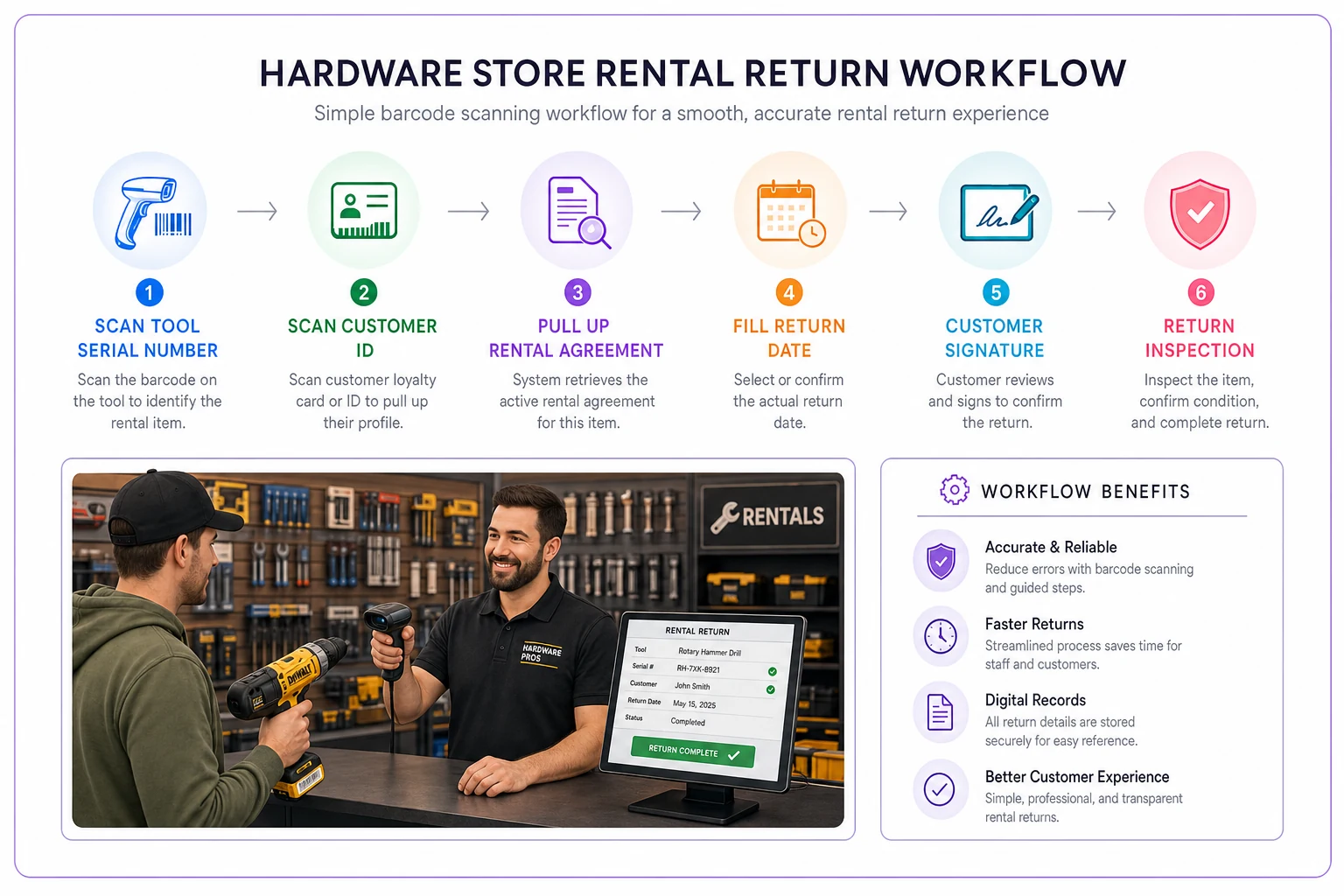
The workflow:
-
Scan tool serial number
-
Scan customer ID (barcoded customer card or driver's license)
-
System pulls up rental agreement template
-
Fill in return date and any special terms
-
Customer signs
Returns work the same in reverse. Scan the tool, the system shows who rented it and when, complete your inspection checklist, process the return.
Basic USB scanners work with spreadsheets, simple databases, or affordable rental software. You're not building a warehouse system—you're eliminating the "wait, did anyone see who returned this jackhammer?" conversation.
Daily operations that prevent problems
The best damage claim is one you never need to file. Consistent daily routines prevent most rental headaches before they start.
Morning prep
Review returns from the previous day. Inspect anything that came back after hours. Run maintenance on tools flagged during return inspection—sharpen blades, check oil, test operation. Update your availability list with actual ready-to-rent inventory, not theoretical inventory.
Rental processing
Don't rush the handoff. Show customers how to operate tools they haven't used before. Point out existing damage so they're not worried about being blamed for it later. Review return time and late fees. Two extra minutes here prevents hours of arguments later.
End-of-day reconciliation
Match physical inventory to your records. Every serial number should be on the shelf, out on rental, or in maintenance. Investigate mismatches the same day—tracking down a missing tool the same afternoon is dramatically easier than chasing it three weeks later.
Weekly maintenance windows
Block out time during your slowest stretch—Tuesday mornings work for a lot of stores—for tool maintenance. Oil and sharpen what needs it. Test tools that haven't rented recently. Update your serial number log with anything retired or added.
When a tool goes missing
Despite everything, tools disappear. Someone processes a return wrong. A customer insists they brought something back when they didn't. A tool walks out during a busy Saturday. Your serial number system makes recovery at least possible.
Check your records for that specific serial number. Who rented it last? When was it supposedly returned? Who processed that return? Start with phone calls—surprisingly often, customers genuinely forgot the tool is still in their truck.
For actual theft, file a police report with the serial number, photos, and rental agreement. Post in local contractor Facebook groups with the serial number visible. Contractors talk. Stolen tools surface when someone tries to sell them and the buyer does a quick search.
If it's gone for good, you at least know exactly what happened. Charge the appropriate customer, file insurance if applicable, adjust your process.
Making the math work
This entire system costs less than replacing two mid-range power tools:
| Item | Cost |
|---|---|
| Metal asset tags (125) | ~$100 |
| Basic barcode scanner | ~$45 |
| Weather-resistant barcode labels | ~$30 |
| Rental tracking software | ~$30/month (or free with spreadsheets) |
| Smartphone for photos | Already have one |
Compare that to what poor tracking actually costs:
-
Lost tools
$200–800 each
-
Disputed damage
Eating $50–200 in repair costs
-
Phantom inventory
Lost rentals when tools aren't actually available
-
Customer disputes
Time, stress, and damaged relationships
Most stores see payback within 60 days just from reduced losses.
Software that ties it together
Spreadsheets work for basic tracking, but dedicated software removes the manual coordination. Modern platforms built for small operations handle serial tracking, rental agreements, damage documentation, and customer history without the complexity of enterprise systems.
The right software becomes your operational memory. It tracks which customer always returns tools dirty, which items need maintenance every few rentals, and which tools actually generate revenue. AI-powered operational platforms take this further—automating reminders for overdue rentals, flagging tools due for maintenance based on rental history, and surfacing patterns you'd miss manually.
You want something that handles walk-in rentals quickly, not construction equipment software designed for week-long contracts. The serial number should tie everything together—pull it up once and see the tool's entire history, maintenance record, and rental performance.
Building from where you are
You don't need to serialize your entire rental inventory tomorrow. Start with your most expensive or most problematic tools. That portable generator that keeps coming back damaged? Tag it first. The pressure washers driving half your rental revenue? Priority two.
Build the habit with five tools. Document their condition, track their rentals, manage their maintenance. Once that feels natural, add another category. Within a few months, you'll have the whole rental operation running consistently.
The stores doing well with tool rentals aren't the ones with the fanciest technology. They're the ones with consistent processes that protect their assets while keeping things quick and customer-friendly. A serial number on each tool makes that possible without enterprise-level investment.
Your rental department could become your most profitable square footage—but only if you actually know where your tools are.
Ready to elevate your hardware store management?
Join 500+ hardware stores using Hardzly to boost operational efficiency, reduce stockouts, and grow revenue.